











After 11 years as a paramedic with Sanford Ambulance in North Dakota, I've learned there's another side most blood thinner patients never think about.
Because the same medication protecting you every day can also change how we're able to treat you during an emergency.
When I brought this up with Dr. Morgan, a cardiologist at the Sanford Medical Center, he leaned back and said something I'll never forget.
He said there were four things he wished every blood thinner patient would stop doing starting tonight.
#1. Never assume a small fall is "just a fall."
Picture it. You trip on a rug, bump yourself on the way down, laugh it off, and move on. For most people, that's the end of it — a bruise, some soreness, nothing more.
But here's what almost nobody realizes: every bruise is internal bleeding. Normally your body shuts it down fast — it forms a clot, patches the damage, and you never think about it again.
But when you're taking blood thinners, that same bruise can become more dangerous.
The bruise spreads wider. It heals slower. And if the fall was harder than you thought — especially a knock to the head — bleeding you can't see can quietly become the most dangerous thing in the room.

#2: Never leave the house without medical identification.
This is the one that keeps Dr. Morgan up at night.
Picture it again. You're not home. You're alone. There's been an accident, and you're unconscious — you cannot tell anyone what's happening inside your body.
Almost nobody prepares for this, not because you're careless, but because accidents don't wait until you're ready.
Sometimes it isn't even your fault, a driver runs a red light, or someone knocks into you and you go down.
And when you can't speak for yourself, the EMTs on scene need to know one thing immediately: are you on blood thinners?

"Before a single question is asked, EMS knows she's on blood thinners."
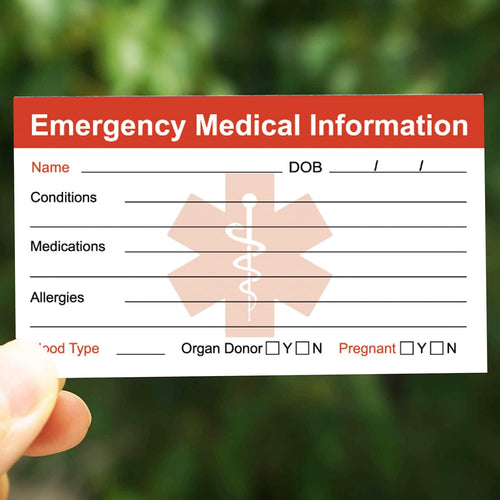
Wearing a medical identification (ID) changes how EMTs treat you. It tells them to look for bleeding they can't see, and whether to adjust treatment or rush you straight to a trauma center.
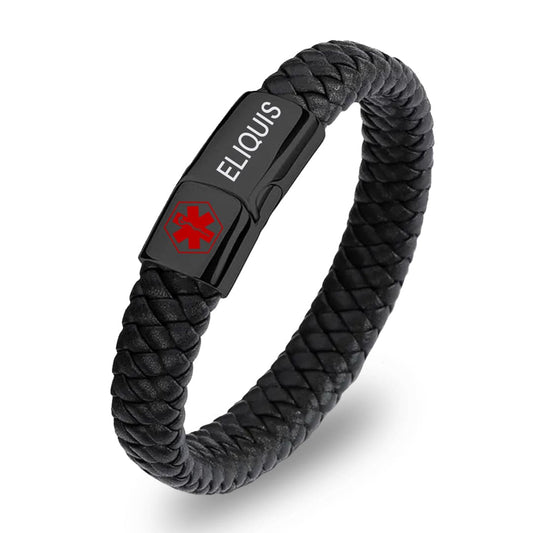
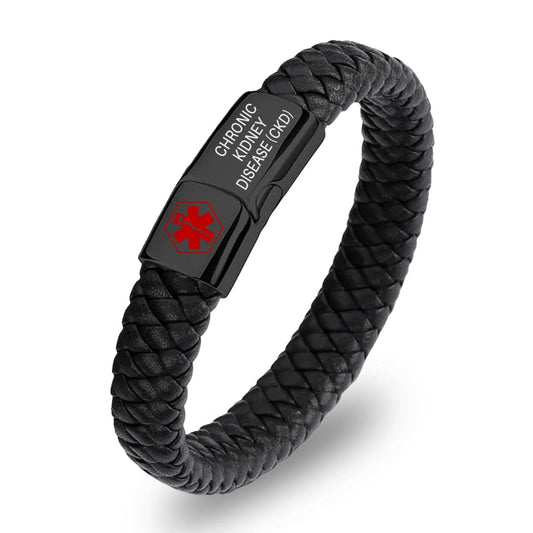
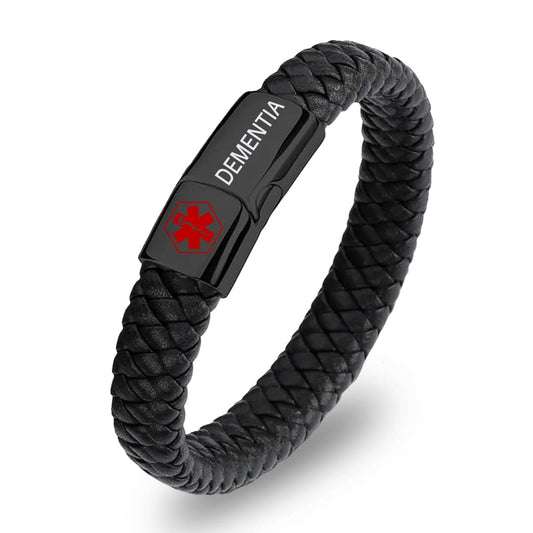
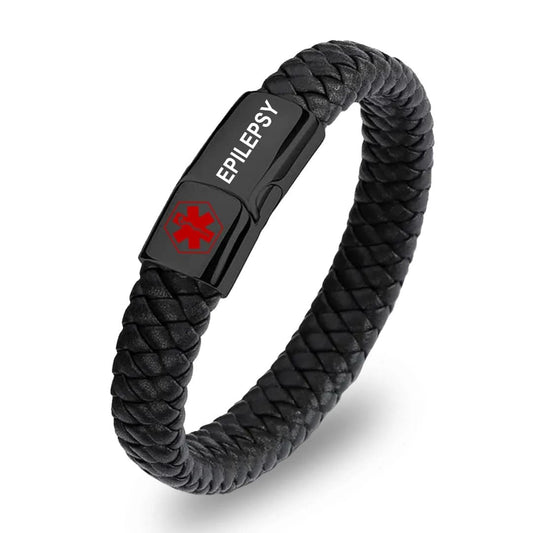
It's why we see more and more blood thinner patients wear medical IDs like My Medi Friend. Because when you can't speak, your bracelet can.
And that raises an obvious question, one almost everyone gets wrong. "Can't my phone just do that for me?"
#3: Never rely only on your phone in an emergency.
I understand why people believe this. Your phone has fall detection. Emergency contacts. A medical app. It feels like enough.
But let me tell you what actually happens.
From the moment someone dials for help, it takes an average of 15 minutes for us to arrive.
And in the first 10 seconds after we do, I'm on my knees beside you - two fingers on your wrist, feeling for a pulse.
That's the moment. That’s when I either see a bracelet that reads BLOOD THINNERS, or we don't.

"Emergency, ambulance, hospital: three handoffs, and your wrist is the one thing that travels with you"
What I don't do is stop to unlock your phone. I can't guess your passcode. I don't dig through your wallet.
So every second I'd waste searching, I spend keeping you alive instead.
Which brings us to the fourth mistake — and it's the quietest one of all, because you'll never notice yourself making it.
#4: Never think, "It won't happen to me."
Think about it. Nobody plans a fall. Nobody schedules an accident. That's exactly the point.
And here's the part that should stop you cold: it's the same reason you take a blood thinner every single day. You don't wait for a stroke before you protect yourself.
You take that pill because you can't predict the one day you'll need the protection most.

"Sarah, 64. Not worrying about her blood thinner once, because her wrist already handling it"
A medical bracelet is the same safety net, bought once and worn every day.
Not because you expect an emergency but because if one ever comes, after a crash, a fall, or a moment you never saw coming, you want your information to speak the second you can't.
So instead of turning "what if" over in your head, you get to have a peace of mind, knowing you've already done the one thing that protects you.
Now one honest question remains.
So What Actually Keeps You Safe?
I'll be straight with you, because I've seen this go wrong.
Some hospitals hand out medical IDs for free. But most people never wear them. And the reason is almost silly: they look like hospital equipment. Bulky. Clinical. A plastic band that announces to the whole world, "I'm a patient."
That's why, when someone asks me where to actually get one, I point them to My Medi Friend.

Here are the main reasons why I always recommend their bracelets:
- You forget it's on when wearing it daily- dainty, lightweight jewelry
- Elegant red pendant - medical symbol that can save your life
- "Blood Thinner" engraved in - never fades so responders always read it.
- It won't rust or fade - 316 surgical steel, medical-grade
- Gentle on sensitive skin - no redness, no irritation.
What if it breaks you might ask? It won't because every bracelet clears three quality checks before it ships, so it won't break, fade, or rust.
And you've got a full year to prove them wrong: if it ever fails, they replace it free or refund every cent — because this is the one thing that can't fail on the day it matters.
You can still check the available designs here if you’re interested, but both Dr. Morgan and I highly recommend getting one today.
Because we've seen it firsthand on scene: it's not a prevention thing, it's a voice. It speaks for you the second you can't speak for yourself.
Comments