











If you were put on blood thinners in the last few months, this is going to be the most important thing you read all week.
Not because I'm a doctor. I'm not.
I'm just a woman who got the diagnosis, did everything I was told, and still lay awake at night with a fear I couldn't name.
The fear nobody talks about after starting blood thinners
Everyone's been telling me the same thing. "You can still live a full life on blood thinners."
You've heard it from the doctor. From the nurse. From every forum you've scrolled at 2am. You can live a completely normal life.
And you want to believe it. You really do.
But none of them are the ones awake at 2am, doing the math on everything that could go wrong.
I want to tell you about the first few weeks. I became the most careful woman alive.
I got cautious cutting vegetables, of all things, something I'd done a thousand times without a second thought. I started wearing gloves for anything that could nick me.
I flinched at the corner of every kitchen counter, every coffee table, because I'd read what a bump to the head can do when your blood won't clot the way it used to.
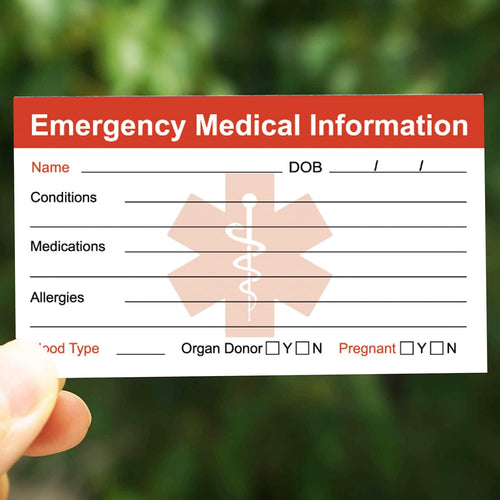
My doctor said get a medical ID. So did the nurse. And I nodded. And I didn't do it.
Because I'll be honest with you, I didn't want to look like a patient.
I didn't want a piece of plastic hospital bracelet on my wrist announcing to the world that something was wrong with me. I was already grieving enough.

"I started wearing gloves to cut vegetables."
The Part Nobody Warns You About
Because that's the part nobody warns you about, is it?
It's not just the pills. It's the quiet list of things you start letting go of.
I read one woman online write that she was "a bit salty she might have to give up running" - the one thing that made her feel alive. I felt every word of that.
But the one that stopped me cold was another woman, a young mum, who wrote: "I always worry I'll have a random hemorrhage and leave my family behind. It's given me terrible health anxiety."
I read that and I had to put my phone down. Because that was the fear I hadn't let myself say out loud.
The one underneath all the carefulness. What happens to them if something happens to me.
A Paramedic Saw The Problem My Doctor Never Explained
Then my brother-in-law came over one day. He's been a paramedic for over a decade.
He knew I'd just started on thinners, and somewhere between coffee and lunch, he glanced down at my wrist and asked me a question I wasn't ready for.
"So what happens if you go down and you can't talk?" I told him I had it covered. It's on my phone's lock screen.
I'd set up the medical alert. It's on the card in my purse, exactly like the nurse showed me.
He put his coffee down. And he told me something I've never forgotten.

"This is why it can't live on your phone."
The Bleeding Risk Isn't What Most People Think
"Here's what nobody sat you down and explained properly. The clot - that's what the drug is for. It fights that one well. That part's handled.
So yes, the thing it leaves open is the bleeding. You already know that. It's probably the exact thing you lie awake thinking about.
But you're picturing the wrong bleed. You're picturing a cut. Something you'd see. Something you'd deal with. That's not the one that takes people.
It's the one inside. A knock to the head, a fall, a fender-bender - the kind of thing you'd normally walk away from.
Except now it doesn't stop. It keeps going quietly, on the inside, where there's nothing to see and nothing to feel until it's already serious."
He let that sit for a second.

"The bleed that takes people isn't the one you can see. It's this one."
The Problem Wasn't The Bleeding. It Was Being Unknown.
"And here's the part that should bother you more than it does.
When I pull up and you're unconscious with no cut, no blood - you look completely fine to me.
I have no way of knowing your blood won't clot. None. Not unless something on you tells me. That's the half nobody prepares you for. It was never just 'the bleeding.'
It's that the bleed that matters most is the one none of us can see - so the only way I catch it in time is if I already know you're on a thinner before I lay a hand on you."
Why My Phone Wasn't Enough
So I said - fine. That's what the phone is for. That's the card in my purse.
He shook his head. "When I roll up on someone unconscious, I am not going through a handbag for a wallet card. I am not trying to unlock a smashed phone that's got a passcode on it. I don't have those minutes to spare, and neither do you. A phone breaks. A phone locks. A purse takes time I don't have."
He wasn't criticising me. He said the opposite, actually.
"You're already doing the hard part. You're taking a drug every single day to stop something that could kill you. You're fighting the whole battle with everything you've got. Nobody just showed you the last piece."
The One Place Paramedics Always Look First
And then he told me the piece.
"Time is everything. In a lot of areas it's fifteen, twenty minutes before an ambulance even reaches you.
And if I can see straightaway that you're on a thinner, I can call ahead to the trauma centre before we even move you - so the second you arrive, they're ready to scan you for internal bleeding.
Every minute we save there is a minute that matters."
So I asked him the only question that mattered: "Then how do I make sure you know? In the seconds where it counts?"
He smiled. Because apparently the answer is the oldest one in the book.
"The first thing I check on anyone is the wrist. For a pulse. Every single time. I don't care what anyone tells you, that's where my hands go first."
"If the fact I need is sitting right there on your wrist, I can't miss it. That's the whole trick. Put it where we're already looking."

The first place his hands go is the wrist. Make sure the one fact that saves you is already there
The Medical Bracelet I Actually Wanted To Wear
So I finally told him the truth. The real reason I'd never done it.
My doctor had told me to get a medical ID months ago, and I'd quietly ignored it. Because every one I'd ever seen was ugly.
They looked like hospital equipment. They looked like the exact thing I was trying not to become.
He laughed. Not unkindly - because apparently he hears that all the time. Especially from women.
"That's the most common reason people don't wear one," he said. "They think it has to look like a hospital tag. It doesn't anymore."
And then he told me about the ones he'd actually started recommending.
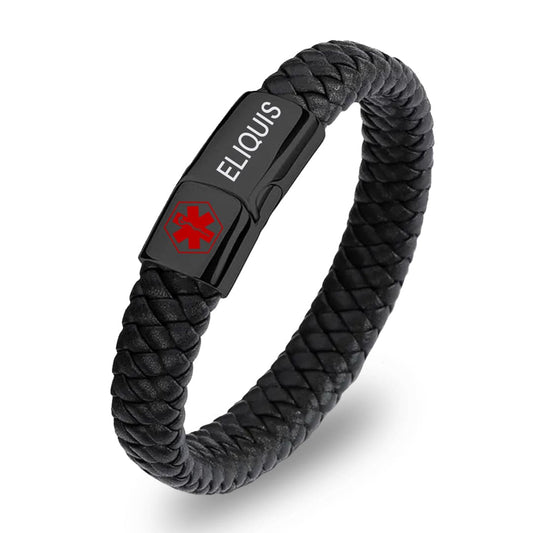
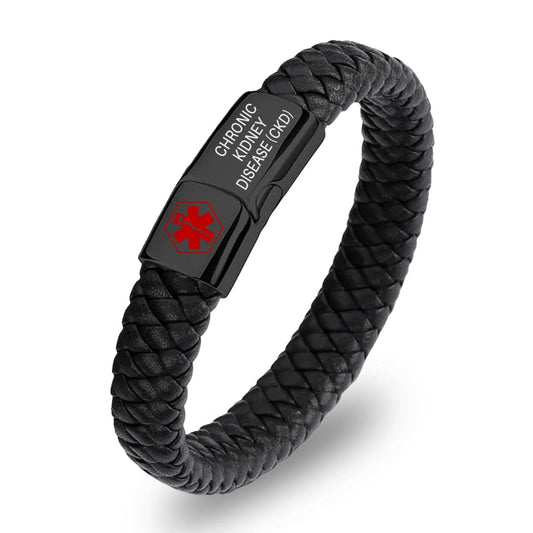
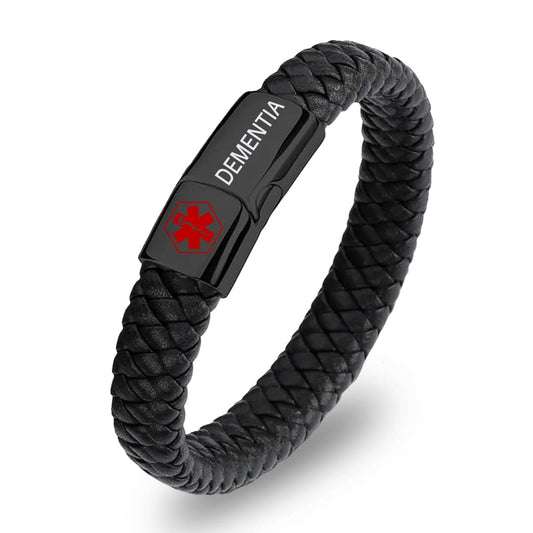
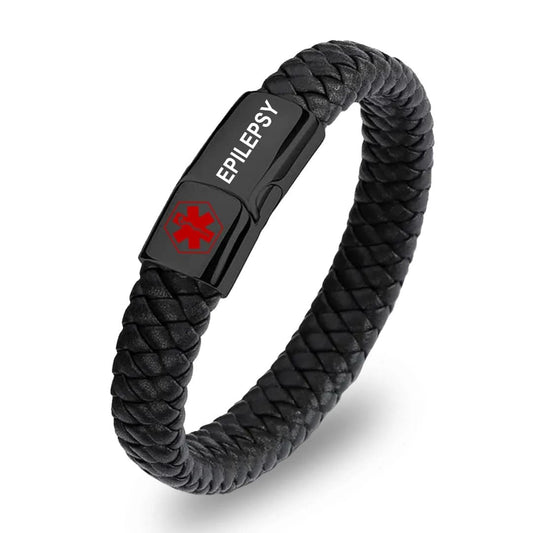
A company called My Medi Friend.
"They come at it from the opposite direction. They work with real designers, so it reads as a bracelet you'd actually choose to wear - delicate, feminine, something you'd pair with the rest of your jewelry. Not a medical tag."
"But it still carries the one thing that matters. The universal medical symbol I'd recognize anywhere in the world, and the words that change how I treat you."
Coming from him - the person who'd actually be the one kneeling over me on the worst day - that landed differently than any note from a doctor ever had.
He wasn't telling me to look like a patient. He was telling me how to be found.

"The medical symbol is the Rod of Asclepius, a single snake wrapped around a staff."
This Wasn't Just My Anxiety
That was it. That was the thing that finally let me sleep. Not a stronger pill. Not another sacrifice.
Just making sure the one fact that saves my life is in the one place a paramedic looks first.
And it turns out this isn't a small or rare problem.
There's a landmark study in the New England Journal of Medicine that looked at why older adults end up in emergency hospitalizations for medication side effects.
Out of every medication on the shelf - every pill, every drug - blood thinners were the number one cause.
Behind roughly one in three of those emergency hospitalizations. More than any other medication in the country.
This is not a fear someone invented to sell you something.
It's the single most common way a medication puts someone in an emergency bed. You are right to take it seriously.

"Emergency, ambulance, hospital: three handoffs, and your wrist is the one thing that travels with you"
What This Bracelet Can — And Cannot — Do
It looks like something you own. It works like something that protects you.
Mine's stainless steel. It doesn't rust, it doesn't tarnish, it shrugs off water, and it's light enough that most days I forget it's there.
Which is the point. You get on with your life. It just sits there, doing nothing - until the one day it does everything.
Now let me be honest with you, the way I wish more people had been with me.
This bracelet will not stop a clot. It will not stop a bleed.
It is not a treatment, and it will never replace the pills you take every day. Anyone who tells you differently is lying.
Think of it like a lifeguard. A lifeguard doesn't stop you from drowning by sitting in his tower.
They change what happens in the seconds that decide everything. That's all this is. It doesn't lower the risk you already live with.
It makes sure that if the worst day comes, the people trying to save you aren't guessing.
The Thing I Got Back Was My Normal Life
But here's what it actually gave me. And it's more than I expected.
It gave me my life back - the ordinary version.
I'm still careful. But I stopped white-knuckling every single day, because the fear finally had an answer.
And if I become unconscious one day and can't speak for myself? My husband knows. My friends know.
And now, a total stranger kneeling over me on the worst day of my life would know too, in the two seconds it takes to reach for a pulse.
That fear about leaving my family behind - it didn't vanish. But it stopped running the show. Because I finally did the one thing that meant, if it ever came to it, the people trying to save me would have what they need.

"Sarah, 72. Not worrying about her blood thinner once, because her wrist already handles it"
The One Thing I Wish I Had Done Sooner
That's the difference between living carefully and living scared. And I hadn't realized how scared I'd been until it lifted.
You already know your own body better than anyone.
You've learned to read it, to notice things, to know when something's off and when to get checked out. That awareness is a strength, it's keeping you alive.
This is just the last piece of it. The part that speaks for you in the one moment you can't speak for yourself.
The Reason Cheap Medical Bracelets End Up Forgotten
Now don't compare this to the price of a bracelet. That's the wrong number.
Compare it to what you've been carrying since the day you were diagnosed.
The thing that keeps you awake at 2am. The flinch at every corner. The quiet, constant background hum of what if I go down and nobody knows.
That anxiety has a cost too. You've just been paying it in a currency that doesn't show up on a receipt.
This you buy once. And the weight it takes off your mind, you feel every day after.

Don't Wait Until You Need It
And if you've owned one of these before, I know the other thing you're thinking.
They break. They tarnish. The clasp gives out inside a year and you're back to wearing nothing.
I thought that too. It's half the reason the cheap ones end up forgotten in a drawer. But My Medi Friend wasn't built by a jewelry company chasing a trend.
It was built by someone who actually lives this because the founder is on blood thinners himself. So it was never a novelty to him. It's the thing he wanted on his own wrist on his worst day.
Every piece is triple-checked before it leaves the factory, and checked again before it's shipped to you.
Medical-grade stainless steel that won't rust or tarnish. A clasp built to hold. And they're confident enough to stand behind it with a full one-year guarantee.
If it fails you in that time, they replace it - no argument. Because a medical bracelet that quits on you isn't a small annoyance. It's the one day it isn't there that you'll never get back.
It's $24.99. Backed for a year. Worn for life.
If you were put on thinners recently, and you recognize yourself in any of this - the carefulness, the grief, the fear you can't quite put down - please don't do what I did and leave it for months.
I got lucky. I had a paramedic in the family who sat me down before anything happened.
You can still check the available designs here, but I’d highly recommend getting one if you don’t have any yet.
Comments